Rent or buy? The costs of owning a home that people forget
Rent vs buy, worked through: mortgage, property tax, insurance, PMI, maintenance and closing costs compared with rent, plus how lenders use debt-to-income.
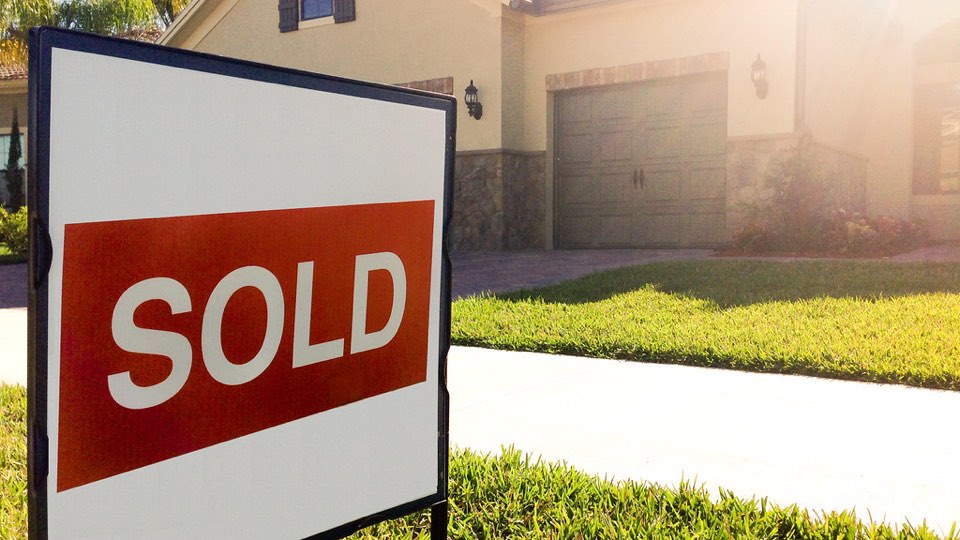
"Rent is throwing money away" is one of the most repeated lines in personal finance, and one of the least helpful. Owning has its own money that you never get back: interest, property tax, insurance, repairs and the costs of buying and selling. The honest comparison puts all of it next to your rent.
The upfront cash: more than the down payment
Before you get the keys, you need three kinds of money.
- Down payment. Freddie Mac says a down payment is typically 5% to 20% of the price, and qualified buyers can put down as little as 3%.
- Closing costs. Appraisal, title, lender and other fees. Freddie Mac estimates them at roughly 2% to 5% of the purchase price.
- Smaller costs along the way. Earnest money of about 1% to 2% of the price (credited back at closing), a home inspection of roughly $300 to $500, and moving costs.
On top of that, you still need an emergency fund after closing. A homeowner's emergencies include a broken water heater or a leaking roof, and there is no landlord to call.
The monthly costs of owning
Principal and interest. This is the mortgage payment itself. It depends on the loan amount, the rate and the term. For context, Freddie Mac's weekly survey put the average 30-year fixed rate at 7.40% for the week of 8 October 2026, up from 7.28% a week earlier.
Property tax. Set by your local government and often collected monthly by the lender through an escrow account. It varies widely by state and county, so look up the actual bill for any home you consider.
Homeowners insurance. Lenders require it. Get quotes before you make an offer, because premiums vary a lot by location.
PMI. On a conventional loan, private mortgage insurance is usually required if you put down less than 20%. The CFPB points out that PMI protects the lender, not you. You can ask your servicer in writing to cancel it once your balance reaches 80% of the home's original value, if you have a good payment history, no second mortgage and the home has not lost value. It generally ends automatically when the balance is scheduled to reach 78%, as long as you are current on payments.
Maintenance. A common rule of thumb is to budget about 1% of the home's price each year for upkeep. It is only a rough guide: an older house or a harsh climate can cost more, a new build less, and the spending comes in lumps rather than evenly.
Opportunity cost. The down payment and closing costs could have stayed invested. Money tied up in a house is money that is not compounding somewhere else. It does not show up on any bill, but it is a real cost of owning.
The worked example
Assumptions for illustration only: a $350,000 home, 10% down ($35,000), a 30-year fixed loan of $315,000 at 7.40% (the Freddie Mac average for the week of 8 October 2026), property tax of 1.1% of the price per year, homeowners insurance of $1,800 a year, maintenance at the 1% rule of thumb, PMI of 0.5% of the loan per year, and closing costs of 3% ($10,500). The $45,500 of upfront cash is assumed to earn 4% a year if invested instead. The comparable rent is $2,000 a month.
| Monthly cost | Owning | Renting |
|---|---|---|
| Mortgage principal and interest | $2,181 | – |
| Property tax | $321 | – |
| Homeowners insurance | $150 | – |
| PMI | $131 | – |
| Maintenance (1% rule of thumb) | $292 | – |
| Lost return on $45,500 upfront cash | $152 | – |
| Rent | – | $2,000 |
| Renters insurance | – | $20 |
| Total monthly cost | $3,226 | $2,020 |
| Minus principal repaid (average, year 1) | $247 | – |
| Owning cost excluding principal | $2,980 | $2,020 |
Read the table in two ways.
- Cash out the door: owning costs $1,206 more per month than renting here. That is the number your budget feels.
- True cost: part of each mortgage payment pays down the loan. In the first year that averages $247 a month, which is closer to saving than spending. Take it out, and owning still costs $960 more per month than renting in this example.
The gap can shrink or flip. Lower rates, a cheaper home relative to rents, rising rents or rising home prices all favor buying over time. The point is not that renting always wins; it is that the comparison is your rent against the full cost of owning, not your rent against a mortgage payment.
If you rent, the gap is only an advantage if you actually invest it. A renter who spends the difference ends up with neither the house nor the savings.
How lenders look at it: debt-to-income ratio
Lenders judge whether you can afford a mortgage partly by your debt-to-income ratio (DTI): your total monthly debt payments divided by your gross monthly income, before tax. The CFPB says the limits vary by lender and loan type.
The CFPB's Your Money, Your Goals toolkit gives common benchmarks for homeowners: mortgage principal and interest of about 28% to 35% of gross income, and all debt payments together at 36% or less. Some lenders allow 43% or more, and many also count tax and insurance when they check the housing ratio.
In the example, principal and interest alone come to $2,181 a month, or 22% of an illustrative gross income of $10,000. Add tax, insurance and PMI and it is $2,783, or 28%, before any car loan, student loan or card payments. Being approved for a loan is not the same as the payment fitting your budget, so run it through the calculators with your real numbers.
How long you plan to stay matters most
Buying and selling both cost money. You pay closing costs on the way in, and on the way out there are usually agent commissions and other selling costs. In the early years of a mortgage, most of each payment is interest, so equity builds slowly.
Put those together and the timeline becomes the deciding factor. If you may move for work, a relationship or a growing family within a few years, renting is often cheaper even when the monthly numbers look close. If you expect to stay put for a long time, the upfront costs are spread over more years and principal repayments add up.
What to do this week
- Write down your current rent plus renters insurance, then estimate the full monthly cost of owning a home you would actually buy, using local property tax and insurance quotes.
- Add up the upfront cash you would need: down payment, closing costs at 2% to 5% of the price, and moving costs, while keeping your emergency fund intact.
- Work out your debt-to-income ratio with your gross monthly income and all your current debt payments.
- Be honest about how long you expect to stay in the same area, and let that guide the decision as much as the monthly numbers.
General education, not personal financial advice. Figures are illustrations computed from the stated assumptions.
Sources
- Freddie Mac: Primary Mortgage Market Survey (week of 8 October 2026)
- Freddie Mac My Home: Budgeting for upfront homebuying costs
- CFPB: What is private mortgage insurance?
- CFPB: When can I remove private mortgage insurance (PMI) from my loan?
- CFPB: What is a debt-to-income ratio?
- CFPB: Your Money, Your Goals debt-to-income calculator
Links checked 9 Oct 2026. Ledgerly is education, not personal financial advice.
 How long should a car loan be? 36, 48, 60, 72 and 84 months compared
 Which insurance you actually need in your 20s and 30s
 How to spot investment and crypto scams before they cost you
 The 50/30/20 budget, worked through