Roth vs traditional: should you pay the tax now or later?
Roth vs traditional IRA and 401(k): 2026 contribution limits, Roth income limits, withdrawal rules and a worked example of tax now vs tax later.
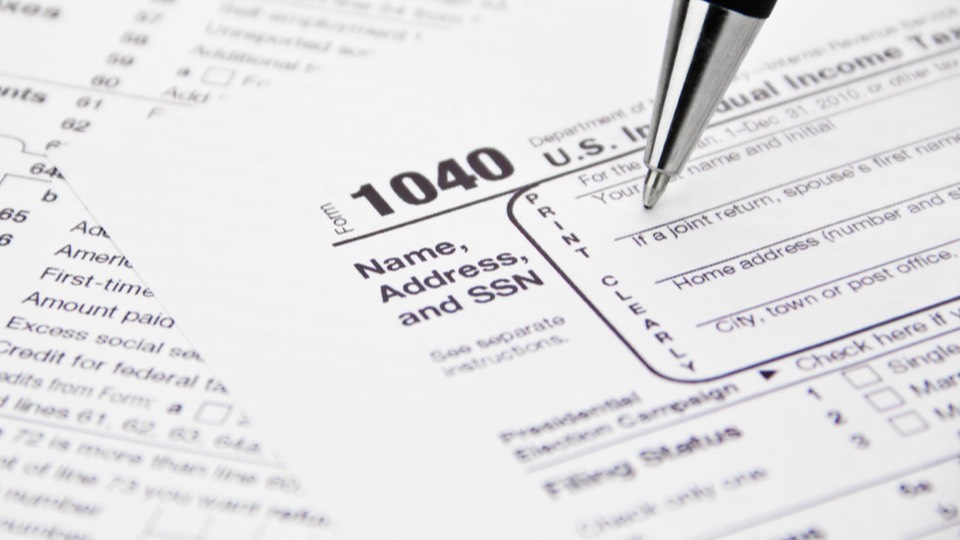
Every US retirement account makes you pay income tax at some point. The only real question in Roth vs traditional is when: on the money going in, or on the money coming out. This guide walks through the 2026 rules and shows, with one worked example, why your tax rate today compared with your rate in retirement decides the answer.
Tax now or tax later
Traditional (pre-tax). Contributions to a traditional 401(k) come out of your paycheck before income tax, and traditional IRA contributions may be deductible. The money grows untaxed, and everything you withdraw in retirement, contributions and growth, is taxed as ordinary income (except any nondeductible IRA contributions you made).
Roth (after-tax). You pay income tax on the money first and contribute what is left; Roth IRA contributions are not deductible. In exchange, qualified withdrawals, including all the growth, are tax-free.
Both versions exist for workplace plans and for IRAs. A Roth 401(k) (the IRS calls it a designated Roth account) sits inside your employer's plan; a Roth IRA is an account you open yourself at a broker.
2026 contribution limits
The IRS announced the 2026 limits in November 2025:
| Account (2026) | Standard limit | Extra catch-up |
|---|---|---|
| 401(k) employee deferrals | $24,500 | $8,000 at age 50+, or $11,250 at ages 60–63 |
| IRA (traditional and Roth combined) | $7,500 | $1,100 at age 50+ |
Two details trip people up:
- The 401(k) limit is one limit. Your pre-tax and Roth 401(k) deferrals share it, and you can split between them in any proportion you like.
- The IRA limit is one limit too. It covers all of your traditional and Roth IRAs added together, not each account.
A 401(k) and an IRA are separate buckets, so you can contribute to both in the same year. One catch for traditional IRAs: if you are covered by a workplace plan, the deduction phases out as income rises. For 2026 the range is $81,000 to $91,000 of MAGI for a single filer and $129,000 to $149,000 for a married couple filing jointly when the contributing spouse is covered.
Roth IRA income limits for 2026
Roth IRAs have an income cap. Your allowed contribution shrinks, then disappears, as your modified adjusted gross income (MAGI) rises through these 2026 ranges:
- Single or head of household: $153,000 to $168,000
- Married filing jointly: $242,000 to $252,000
- Married filing separately: $0 to $10,000
The Roth 401(k) has no income limit. If your income is too high for a Roth IRA and your plan offers a Roth option, that is the simplest way to get Roth money.
Getting money out
Roth IRA contributions (not earnings) can be taken out at any time without tax or the 10% early-withdrawal penalty, because you already paid tax on them. That flexibility is one reason some people like a Roth IRA as a second line of savings after their emergency fund, though money you take out loses its tax-free growth.
Earnings are different. To take growth out tax-free, the withdrawal has to be "qualified." In general that means the account has met a five-year holding period and the withdrawal is made at 59½ or later, because of disability or death, or (Roth IRA only) for a first home, up to $10,000. Earnings withdrawn too early can be taxed and hit with a 10% penalty, though exceptions exist. For a Roth 401(k), the IRS counts the five years from the first day of the tax year in which you made your first Roth contribution to the plan.
Traditional withdrawals are taxed as income whenever you take them. Taking money out before 59½ usually adds a penalty too; our FIRE types guide covers the early-withdrawal rules and their exceptions.
Required minimum distributions
Traditional IRAs and 401(k)s eventually force withdrawals. Required minimum distributions (RMDs) start at age 73 if you were born between 1951 and 1959. Under the SECURE 2.0 Act the starting age rises to 75 for people born in 1960 or later, which covers most readers of this site.
Roth IRAs have no RMDs while the original owner is alive, and the IRS now says the same for designated Roth accounts in 401(k) plans. Money you don't need can keep growing tax-free for as long as you live.
Worked example: $6,000 of pre-tax income
Imagine you have $6,000 of salary to put toward retirement. In a traditional account the whole amount goes in. In a Roth account you pay tax first, so less goes in. Both cost you the same take-home pay today.
Assumptions for illustration only: 6% yearly return for 30 years, no fees, a 22% tax rate today for the Roth, and flat rates of 12%, 22% or 24% on traditional withdrawals.
| Roth | Traditional, taxed at 12% | Traditional, taxed at 22% | Traditional, taxed at 24% | |
|---|---|---|---|---|
| Tax paid today | $1,320 | $0 | $0 | $0 |
| Amount invested | $4,680 | $6,000 | $6,000 | $6,000 |
| Value after 30 years | $26,880 | $34,461 | $34,461 | $34,461 |
| Tax on withdrawal | $0 | $4,135 | $7,581 | $8,271 |
| You keep | $26,880 | $30,326 | $26,880 | $26,190 |
The result is the core of the whole decision:
- Same tax rate now and later: Roth and traditional end up identical ($26,880 vs $26,880). Paying 22% now or 22% later on a larger pot works out the same.
- Lower rate in retirement: traditional wins, here by $3,446.
- Higher rate in retirement: Roth wins, here by $689.
For context, 12%, 22% and 24% are real 2026 federal brackets. A single filer's taxable income is taxed at 22% above $50,400 and at 24% above $105,700. Real life is messier than one flat rate: withdrawals are spread across brackets, states tax differently, and tax law can change.
How to decide
Ask which tax rate is likely to be higher, now or in retirement.
Roth tends to fit when:
- You are early in your career and in the 10% or 12% bracket.
- You expect your income, and your tax rate, to rise.
- You value flexibility: contributions you can reach, and no RMDs.
Traditional tends to fit when:
- You are in a high bracket now and expect to live on less in retirement.
- The deduction today is what lets you save more, or keeps you below an income threshold that matters to you.
Split when unsure. Nobody knows future tax rates. Putting some money in each type gives you choices in retirement: you can draw from the traditional side up to a low bracket and use Roth money above it. One simple way to split is to use one type in your 401(k) and the other in your IRA.
One rule applies whichever you pick: if your employer matches 401(k) contributions, contribute at least enough to get the full match first. Our 401(k) match guide shows how much that is worth.
What to do this week
- Find last year's tax return and look up your marginal federal bracket. As a rough rule of thumb, a bracket below 22% often favors Roth and a much higher one often favors traditional.
- Log in to your 401(k) and check whether the plan offers a Roth option and what your current split is.
- If you open or fund an IRA, check your expected 2026 MAGI against the Roth ranges above before you contribute.
- Run your numbers in our calculators to see how much a yearly contribution could grow.
General education, not personal financial advice. Figures are illustrations computed from the stated assumptions.
Sources
- U.S. Code, 26 U.S.C. 401(a)(9): required beginning date and applicable age (SECURE 2.0)
- IRS: 401(k) limit increases to $24,500 for 2026, IRA limit increases to $7,500 (IR-2025-111)
- IRS: Tax inflation adjustments for tax year 2026 (IR-2025-103)
- IRS: Roth IRAs
- IRS: Retirement plans FAQs on designated Roth accounts
- IRS: Retirement plan and IRA required minimum distributions FAQs
- Charles Schwab: Roth IRA withdrawal rules
Links checked 9 Oct 2026. Ledgerly is education, not personal financial advice.
 Your 401(k) match explained: how it works and how to get all of it
 Find your FIRE number in ten minutes
 Why your savings rate decides when you can retire
 Lean, Fat, Coast and Barista FIRE: which kind of early retirement fits you?