How credit scores work, and how to improve yours
How FICO credit scores are calculated, what credit utilization and hard inquiries do, and how to check your reports free and dispute errors.
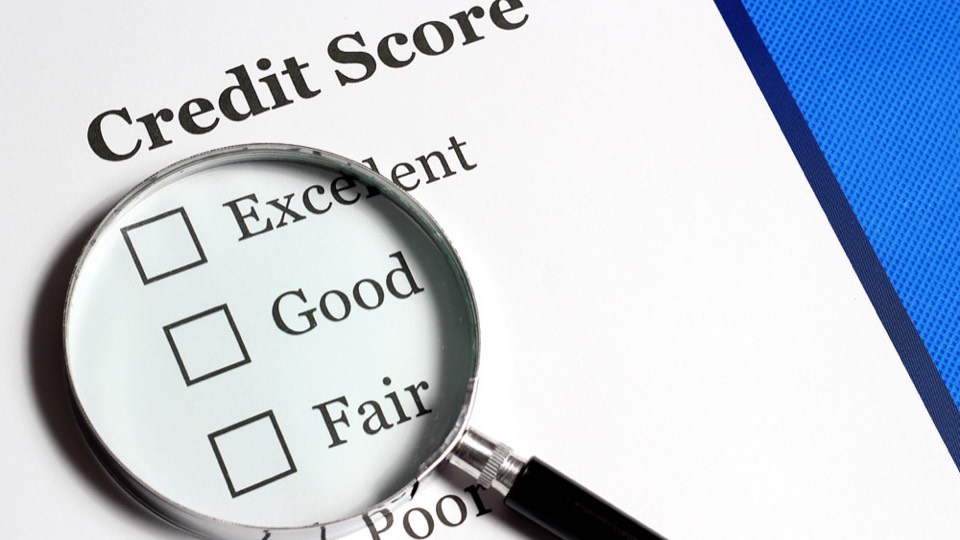
A credit score is a three-digit summary of how you have handled borrowed money, and lenders, landlords and insurers use it to decide whether to say yes and at what price. You cannot see the formula, but the main ingredients are public, and most of them are things you control month to month. This guide covers how the FICO Score is built, the habits that move it, and how to fix mistakes on your reports.
Credit reports vs credit scores
Your credit report is the raw record: your accounts, balances, payment history and recent applications, kept by the three nationwide credit bureaus (Equifax, Experian and TransUnion). Each bureau may hold slightly different information.
Your credit score is a number calculated from one of those reports. Most credit scores run from 300 to 850, with higher being better. On the FICO scale, a "good" score is generally considered 670 to 739. Because there are several scoring models and three reports, you have many scores, not one. They usually move in the same direction.
What goes into a FICO Score
myFICO publishes the rough weight of five categories for the general population:
| Category | Weight | What it looks at |
|---|---|---|
| Payment history | 35% | Whether you have paid your credit accounts on time |
| Amounts owed | 30% | How much you owe and how much of your available credit you are using |
| Length of credit history | 15% | The age of your oldest and newest accounts and the average age of all of them |
| New credit | 10% | Whether you have opened several accounts in a short time |
| Credit mix | 10% | The mix of cards, retail accounts, installment loans and mortgages (you do not need every type) |
myFICO notes that the weights vary from person to person, and that people with short credit histories are scored differently. Still, the table tells you where to focus: the first two categories make up 65%.
The habits that move your score
Pay every bill on time
Payment history is the largest category, so one missed payment can do more harm than anything else on this list. Set up an automatic payment for at least the minimum on every card and loan, then pay more by hand.
Keep utilization low
Credit utilization is the share of your available card credit that you are using: your balances divided by your limits. myFICO says high utilization can lower your score, and that in some cases a low ratio helps more than using none of your credit at all.
One detail catches people out. Card issuers typically report your statement balance to the bureaus, so even if you pay in full every month, a large balance on the statement date can show up as high utilization. If you are about to apply for a loan, paying the card down before the statement closes keeps the reported balance low. Carrying a balance past the due date also costs interest; see how credit card interest works.
Be selective about new credit
There are two kinds of inquiry:
- A hard inquiry happens when a lender checks your credit because you applied for credit. It can lower your score a little. FICO Scores only count inquiries from the last 12 months, though they stay on your report for two years.
- A soft inquiry includes checking your own credit, prescreened offers and account reviews by lenders you already use. Checking your own report or score through a bureau or authorized provider does not affect your FICO Score.
The scoring also allows for "rate shopping", so comparing several lenders for one loan is not treated the same as opening many accounts. Spread out applications that are not essential.
Let accounts age
Length of history rewards time. Before closing an old card with no annual fee, look at what it does to your utilization; the worked example below shows why.
Worked example: paying down one card
Assumptions for illustration only: three credit cards with the limits and balances below, and a one-time $1,500 payment (for example, a tax refund) sent to card B. Utilization is rounded to the nearest whole percent.
| Card | Credit limit | Balance before | Utilization before | Balance after | Utilization after |
|---|---|---|---|---|---|
| Card A | $5,000 | $2,000 | 40% | $2,000 | 40% |
| Card B | $3,000 | $1,500 | 50% | $0 | 0% |
| Card C | $2,000 | $300 | 15% | $300 | 15% |
| All cards | $10,000 | $3,800 | 38% | $2,300 | 23% |
One payment cuts overall utilization from 38% to 23%, and card B, the most heavily used card, goes to 0%. It also leaves one fewer account carrying a balance, which myFICO says matters too: more accounts with balances can signal a higher risk of overextending.
Now suppose you also pay off card C's $300. Keep it open, and you owe $2,000 against $10,000 of limits: 20%. Close it, and the same $2,000 sits against $8,000: 25%. Same debt, higher ratio, simply because the limit disappeared.
If you carry balances on several cards, our avalanche vs snowball guide shows which order to pay them in, and the debt payoff calculator lets you test your own numbers.
Check your reports for free
In the US, the three bureaus let you get a free report from each one every week at AnnualCreditReport.com, the official site (federal law guarantees one free report from each every 12 months). The FTC suggests reviewing all three at least once a year and before you apply for a loan, insurance, an apartment or a job. AnnualCreditReport.com and the bureaus will not email or call you asking for personal details, so type the address yourself rather than clicking a link.
Look for accounts you do not recognize, late payments you did make on time, wrong balances or limits, and duplicate collection accounts.
Dispute errors
If something is wrong, dispute it with both parties:
- The credit bureau that shows the error. Explain in writing what is wrong, include copies (not originals) of documents that support you, and keep records. Bureaus also take disputes online or by phone. The bureau generally has 30 days to investigate.
- The company that supplied the information, such as the card issuer. If it finds the item is inaccurate, it must tell all three bureaus so they can correct your file.
Accurate negative information cannot be disputed away, but it does not last forever: most of it can stay on your report for seven years, and bankruptcy information for ten. In the meantime, a growing record of on-time payments is the best counterweight.
What to do this week
- Get your free reports from all three bureaus at AnnualCreditReport.com and read each line.
- Dispute anything inaccurate with both the bureau and the company that reported it, and keep copies.
- Turn on autopay for at least the minimum on every card and loan.
- Add up your card balances and limits, work out your utilization, and pick one card to pay down first.
General education, not personal financial advice. Figures are illustrations computed from the stated assumptions.
Sources
- myFICO: What's in my FICO Scores?
- myFICO: What is a credit score?
- myFICO: Amounts owed
- myFICO: New credit
- FTC: Free credit reports
- FTC: Disputing errors on your credit reports
Links checked 9 Oct 2026. Ledgerly is education, not personal financial advice.
 How credit card interest works, and what minimum payments really cost
 Avalanche or snowball: clearing debt in the right order
 The 50/30/20 budget, worked through
 How big should your emergency fund be?